Showing posts with label HOT REVIEW. Show all posts

7/31/14

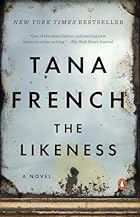
The Likeness by Tana French


 ★★★★¾

The second book in a series is usually dedicated to revealing more of a character than what we saw in the first book, however in "THE LIKENESS"  Cassie Maddox has to go back to the undercover role that she played in the first book because that identity has been stolen and used by the victim in this book.

The case dubbed Operation Mirror is unusual because one would think that if the identity had been stolen, then Cassie would be unable to physically reclaim it, however, the victim is the spitting image of Cassie.

Frank Mackey, Cassie's undercover boss, borrows her from her everyday Domestic Violence team, and sets to work preparing her to undertake the impersonation of the victim to try and find the murderer.  Frank drills her for a week on all the details hat he can find out about the dead Lexie and then reveals to her housemates that she will be coming home with memory loss of the attack and some of the time around then.

Frank sends her into Whitethorn House which Lexie had shared with 4 other students. Cassie/Lexie is  bandaged as if she had survived the attack and underneath the bandage she is wired.  But certain details were not in Cassie/Lexie's training and she has to tread lightly so as to not give up her secret. 

Cassie/Lexie's appearance has the others rattled believing that she had been fatally  wounded.  But slowly Cassie becomes the friend that they lost and she works to undercover what really happened the night of Lexie Madison's murder.

Cassie is changed by the experience, at times wishing that she was Lexie because of the camaraderie of the group, and finding that times she wants to protect her "friends" from the police.  The contrast of their closeness to her real life where she has few friends and currently a boyfriend who doesn't agree with her assignment, have Cassie putting herself in danger.

By the time I had read 12 pages, I was hooked.  The story was so engaging that I literally couldn't put it down.  It had to fall out of my hand before I would turn out the light to sleep. Yes, the book could have been edited down to fewer pages and still told the story, but then the reader would have missed out on the growth of the character  and the complex interactions between all of the characters.  A great follow-up on the first from the series!

GENRE: Mystery
SUBJECT: identity theft,  friendship
Setting: Glenskehy, Ireland
CHARACTERS: Cassandra Maddox, Lexie Madison, Frank Mackey, Sam O'Neill, Daniel March, Justin Mannering, Rafe Hyland, Abby Stone
DATE READ: July 17 - July 30
NO. OF PAGES: 887
Challenges: 75, Category, TIOLI, 
SOURCE: Whisper1 gift


PLOT:....................................................................5.00
CHARACTERIZATION:.......................................5.00
TOPICS: ...............................................................5.00
STYLE:..................................................................4.50
ORIGINALITY:.......................................................4.50
ADDICTIVENESS:..............................................5.00
OWNERSHIP:......................................................4.50
Threshold Quality.................................................4.50
Average..............................................................................................4.75

8/20/13

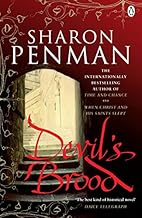
Devil's Brood by Sharon Kay Penman


★★★★¼

GENRE: Historical Fiction
SUBJECT: Henry II's sons and their rebellions
Setting: England, France, Aquitaine
CHARACTERS: Henry II, Hal, Richard, Geoffrey, Eleanor
DATE READ: August 2 - August 20
NO. OF PAGES: 860
Off the Shelf (pre-2013)? Source?: no, Nook

PLOT:....................................................................4.50
CHARACTERIZATION:.......................................3.50
TOPICS: ...............................................................4.00
STYLE:..................................................................4.00
ORIGINALITY:.......................................................4.25
ADDICTIVENESS:..............................................4.25
OWNERSHIP:......................................................3.50
Threshold Quality.................................................4.00
Average..............................................................................................4.25


And we thought that kids nowadays got into trouble….

In this final installment of the story of Henry II and Eleanor of Aquitaine, we are given the account of their four rebellious and ungrateful sons as well as the flawed judgment of the father and mother. Each son (Hal, the young king, Richard - Duke of Aquitaine, Geoffrey, Duke of Brittany, and John) has grievances with the power that King Henry wields over the regions of his kingdom. Each wants the reins to be slackened and the management to be theirs but Henry cannot give up his domination over the lands and the brothers join together to wrest control away.

Normally in a story of this type there are heroes and villains, but not so here, probably because it is based on truth. We are dealing with flawed humans who not always are thinking or acting clearly but are passionate in their desires, selfish, exercising poor judgment or no judgment at all.

Henry could not understand why his sons would be so ungrateful as to rebel against his authority. He did not feel that they were mature enough to handle the reins of power, however, when they cited his experiences at the same age, he could not justify his delays to them. Henry's issues appeared to be with trust throughout his life - his father trusted him at an early age, but he could not trust his sons which only brought about the rebellions that repeatedly threatened his kingdom and his life. He could forgive many of those involved in the rebellion but the betrayal of his Queen Eleanor was the wound that he could not heal which only drove his sons farther away.

Not only is the reader treated to the historical accounts of the events of the reign of Henry II but we are also shown the driving forces of the other 2 sons - Hal, the young King, and Geoffrey the Duke of Brittany - who did not live to wear the crown of England. We know of Richard the Lionheart as well as evil King John, but rarely are we treated to such a personal look at the other two sons who frequently were in the forefront of the rebellions and the reasoning that drove the battles between father and sons.

The characters were brought to life so thoroughly on these pages that often I wanted to shake a few and say, what are you thinking? No matter what, the historical events of the 12th century depicted throughout this meticulously researched book, are woven spectacularly into a tale of a dysfunctional family worthy of 21st century reality TV.

11/11/12

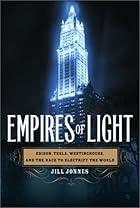
Empires of Light by Jill Jonnes


  ★★★★
GENRE: Non-Fiction
SUBJECT: electricity
SETTING: USA
CHARACTERS: Thomas Edison, Nikola Tesla, George Westinghouse
DATE READ: November 3 - November 11
NO. OF PAGES: 370
Off the Shelf (pre-2012)? Source?:   no, public library
CATEGORY: History Class

PLOT:...................................4
CHARACTERIZATION:...........4
TOPICS:...............................4
STYLE:..................................4
ORIGINALITY:.......................3.5
ADDICTIVENESS:..................3.5
OWNERSHIP:........................4
THRESHOLD QUALITY:..........3.5
Average.................................................3.81

Electricity - something that is much in the news lately thanks to Superstorm Sandy and the impact of power outages in the Northeast, but over one hundred years ago, during the final decades of the 19th century, three visionaries fought over the world and how it should be electrified.

The most famous was, of course, Thomas Edison, and with his invention of the incandescent light bulb, he jumped to the forefront. Most people, if asked will name Edison as the chief person responsible for the electricity that we know today, however, Edison was insistent on the DC (direct current) version of electricity whereas Nikola Tesla, a Serb immigrant, and one-time Edison employee, devised an AC(alternating current) generator and along with George Westinghouse championed the AC current we know today.

Edison was the darling of the media because of previous inventions (phonograph, stock ticker, vote recorder) and his creation the incandescent light bulb, while Westinghouse was content to sit in the background - his inventions of the railroad air brakes and automatic signaling systems increased safety but weren't glamorous.  Westinghouse worked to improve products stating "My ambition is to give as many persons as possible an opportunity to earn money by their own efforts."  He was a man for the labor forces - giving higher wages, ½ day Saturdays, disability benefits, and pensions.

Westinghouse invented the first transformer which allowed Alternating Current service for smaller, wider areas while Edison's DC company could not handle anything that was not within a short distance of the power plant. Yet Edison was furious that Westinghouse was cutting in on his action.  Edison expected that the entire electrical empire should belong to him.

Edison fought ruthlessly against the advancement of the DC current contingent even attempting to discredit its safety by having NY state use it for their death penalty executions.

However, the Westinghouse Electric Company was successful in showing the benefits of the AC when they were  awarded two much sought after contracts - the lighting of the Chicago World's Fair in 1893 and the Niagara Falls Power plant (in conjunction with N. Tesla).  Each of these projects was a major prize for Westinghouse, and an insult to GE (Edison had already been bought out).

But as much as Westinghouse armed with Tesla's patents was able to electrify larger areas, he still had to deal with money men and several times in the last decades of the century he was put into difficult financial positions.  Once, to stave off the company floundering, Tesla agreed to forgo royalties (estimates of $17.5 Million in his lifetime) for his patents so that the Westinghouse Electric Co. would stay afloat and continue to champion the Alternating Current path.  Employees of the Westinghouse companies also donated $600,000 to help with the payments.

In the Panic of 1907 when national banking and finance had a meltdown, Westinghouse was forced to file for bankruptcy even though the companies were profitable.  European expansion had drained his cash and he was unable  to pay certain loans.  He lost control of Westinghouse Electric and his spirit was broken.  But his vision for the betterment of all, not just the elite continued and thrived to this day.

"Today's civilization is full of people who have not the slightest notion of the character or the poetry of night, who have never seen night. Electricity allowed a greater regimentation of life, ripping away the natural rhythms of time and season. The quieting of work and home as the natural light disappeared no longer existed, nor did families gather about the hearth for heat and light."  "19th century human experience was first-hand, in-person, intimate, authentic...With electricity came a veritable cornucopia of possible new experiences....many of them are experienced secondhand."

The alternating current envisioned by Tesla and put into reality by Westinghouse has made it possible for the amazing advancements through the 20th and into the 21st century.  But there is still the requirement of power lines and current reaching the equipment which will give us light and heat.  The next invention needed is a machine which prevents power failures so that those who are hit by massive storms can still have the benefits of electricity.  Who will be the Edison, Tesla, Westinghouse of the 21st century?

11/3/12

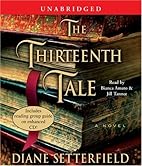
The Thirteenth Tale by Diane Setterfield


 ★★★★¼

GENRE: gothic fiction
SUBJECT: twins, family relationships, dependencies
SETTING: Yorkshire, England
CHARACTERS: Vida Winter, Margaret Lea, Adeline March, Emmeline March, Aurelius Love, Hester Barrow
DATE READ: October 27 - November 3
NO. OF PAGES: 509
Off the Shelf (pre-2012)? Source?:   Yes, audio stockpile
CATEGORY: Speech Class

PLOT: 4.5
CHARACTERIZATION: 3.5
TOPICS: 4
STYLE: 4.5
ORIGINALITY: 4.5
ADDICTIVENESS: 4
OWNERSHIP: 4
THRESHOLD QUALITY: 4
Average 4.13

Vida Winter, a renowned storyteller, is finally ready to tell her own story truthfully.  She has told previous biographers different stories but now that she knows she is dying, she hires Margaret Lea to come to her private estate to listen and record her story.  There are conditions - she cannot ask any questions and must work on Ms. Winter's timetable.  But once she starts talking, there's no turning back.

Her powerful story is compelling, mesmerizing, with twists and turns that make the reader stop, turn around, say what was that, and then just continue to plunge forward seeking more.  Just as Margaret searches for answers without being able to ask any questions, the reader follows along the path of the tale wondering when the truths will be revealed, all the details discovered which will finally tell all.  And then the end, so startling, unexpected, the reader staggers under the final disclosures.

I don't know what else to say. At the very beginning I wasn't excited but the more I got into the story, the more I couldn't put it down.  Just as I thought I was at a place where my mind could take a breather, wham, I was hit with another revelation that knocked me for a loop.  Highly recommended - completely captivating.

11/1/12

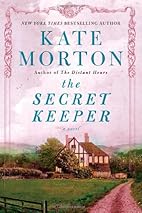
The Secret Keeper by Kate Morton


 ★★★½
GENRE: fiction
SUBJECT: second chances, parental secrets
SETTING: England
CHARACTERS: Dorothy Nicolson, Vivien Jenkins, Laurel Nicolson, Gerry Nicolson, Jimmy Metcalfe
DATE READ: October 21 - October 31
NO. OF PAGES: 463
Off the Shelf (pre-2012)? Source?:   Yes, ARC from publisher for review
CATEGORY: English Lit

PLOT: 3
CHARACTERIZATION: 3.5
TOPICS: 4
STYLE: 4
ORIGINALITY: 3.5
ADDICTIVENESS: 3.5
OWNERSHIP: 3.5
THRESHOLD QUALITY: 4
Average 3.625

This is the story Dorothy Nicolson, mother of five, and her survival during and after WWII.  The framework of the tale is divided into three time frames - 1941, 1961, 2011.  1941 has Dorothy falling in love, making friends while living in London during the Blitz.  Her entire family has already died during air attacks, and she has to find a job and place to live.

Fast forward  twenty years later and you see Dorothy with 4 little girls and Baby Gerry on her hip, when a strange man comes to call.   Eldest daughter, Laurel, hiding in the tree house, sees the encounter when her mother kills the man.  After speaking with the police, Dorothy tells Laurel, not to ever talk about it again.

Fast forward another 50 years and Laurel, now a successful actress, returns home for her mother's 90th birthday and her impending death.  But now Laurel wants answers about that afternoon in 1961, and so she begins to reconstruct her mother's life and what caused her to act the way she did.

The story was fascinating and even though the time frames kept switching back and forth (something that normally drives me crazy), in this book, it works.  The characters are rich and full-blown, grabbing your empathy, loving the good ones, hating the bad ones, wanting to knock some sense into the manipulated ones, and wishing you could tell the whiners to just get over it.

There were a few minor items that I felt were left unresolved or overlooked, but this was so engrossing it really didn't detract from the story.  I have read one other book by this author and enjoyed it as well, so the third book that I have of hers, has just moved up on my TBR pile.

I would like to thank Atria Books Galley Alley at Simon & Schuster for sending me this book to read and review.

5/3/11

Amelia's War by Ann Rinaldi

Read: May 1 - May 3
Format: Hardback 263 pages
Source: Public library
Subject: historical accounts, Civil War
Challenges: 11 in 11, 75 Book, SYLL, TIOLI
Category: The good old days - Historical Fiction
Genre: Historical Fiction
Stars: ★★★★

I am a Marylander. I was born in Maryland, grew up in Maryland, married in Maryland, and have always lived in Maryland. So when the book opens with "Mama and I were Southerners, but not Rebels. We were for the Union but not the Yankees. You have to be from Maryland to understand it."

I understand.

And yet I don't, and because of that, this book expressed my feelings about the Civil War in many ways. In this fictional account, Amelia Grafton is a pre-teen who lives in the "northern" Maryland town of Hagerstown during the Civil War and it is her personal dilemma which is told so beautifully in this book. Because of its location Hagerstown was frequently "visited" by both the Confederate forces and the Union Army. Amelia's best friend is a Southern sympathizer while her father is whole-heartedly for the Union. Her Mother believes that everyone should be treated with kindness whether they are Yankees or Rebels and the family takes in Aunt Lou, an escaped slave, and try to aid her in her run to freedom.

So there are many conflicts for a young girl to face and then when her brother runs off to join the Union forces, Amelia still feels an inner turmoil. Amelia wants to do something to make her contribution to the war effort, but can't decide what that should be until her moment of truth arrives and she has to do something to try to save her town when a ransom is demanded by the Confederate Army general, the uncle of her best friend.

In readings depicting the Civil War, a reader cannot believe that there is even the slightly possibility of avoiding ugliness. War is ugly and no matter how it might be romanticized by writers, the ugliness will creep through and smack you in the face. In the end, even though Amelia makes her contribution, it isn't without that ugliness reaching out to smack her in the face.

Yes, the book is a romanticized depiction of the real-life ransoming of Hagerstown, Maryland and the manner in which the tale is told is geared more toward the Youth for which the book was written, however, for this Marylander it presents the dilemma that was faced by many during the Civil War in an all too clear light - do you support your state or the nation? IMHO, in that time period, states had a much greater pull for their citizens then a national identity did. Rarely if ever, when asked would someone say they were an American, no they were a Virginian or New Yorker, or Georgian, or Marylander. What a wonderful book to show our youth that decisions are not always easy and that peer pressure should not make them race to a decision.

I want to thank Linda (Whisper1) and VictoriaPL for their recommendation of this book.

12/30/10

Call of Duty: The Sterling Nobility of Robert E. Lee by J Steven Wilkins


Read: December 27 - December 29
Format: Hardback 332 pages
Source: Barnes & Noble
Subject: Robert E. Lee
Category: Overflow
Challenges: 101020, 75 Book, TIOLI, BOYS
Stars: 4½

"Any man honored by both his enemies and his compatriots is a man worthy of our closest attentions" and Robert E. Lee is definitely a man worthy of attention. Even to this day, Northerners and Southerners maintain that his character was above reproach.

Historians of his day as well as those of current day, respectfully and unequivocally state virtues that made him the man he was - spiritualism, devotion to family, courage, dedication to duty, self-control, self-denial - the list goes on and on.

Realizing that Lee embodied these incomparable traits, how was he drawn to become the focal point of the Confederacy's battle for independence? The inner core of Robert E. Lee was a Virginian. Throughout his early life, his dedication to duty - whether it be the care of his ailing mother, his own family, or military service (he never received a demerit while attending West Point) - Robert E. Lee always put duty above all else. So that when his native state seceded from the Union, Lee felt compelled to go with her. He wrote to his sister "With all my devotion to the Union and the feeling of loyalty and duty of an American citizen, I have not been able to make up my mind to raise my hand against my relatives, my children, my home. I have therefore resigned my commission in the Army, and save in defense of my native state, with sincere hope that my poor services may never be needed, I hope I may never be called on to draw my sword."

Lee's military genius was recognized by both North and South. It is frequently commented that if Lee had been in command of the Northern forces (a position offered to him and which he declined), the Civil War would have ended in 6 months, possibly a year at most. He took command of the Virginia forces and immediately increased discipline, ended favoritism, instituted work details, improved supply service, and removed incompetent officers in such a way as not to disgrace them maintaining their support to duty.

As commander of the forces, when errors occurred in combat, he was the first to assume the responsibility rather than identifying others to blame. His men saw only the nobility of the man even in treatment to his enemies. It is unfortunate that such a great man will always be remembered as the general a losing cause rather than the man of principle and dignity that he truly was.

I thought that this was a tremendous book detailing the dignity and service of this great man. I would recommend it to anyone looking to see how a military man could also be a man of peace and gentility.

9/14/10

Desperate engagement : how a little-known Civil War battle saved Washington, D.C., and changed American history by Marc Leepson


Read: September 9 - September 14
Format: 236 pages
Source: Public library
Subject: Civil War, Battle of Monocacy, Capital defenses
Category: Civil War and its Leaders
Genre: History
Challenges: 101020, 75 Book, SYLL, TIOLI
Stars: 4


How amazing is it to live within a 50 mile radius of an area and never know the historical impact that it holds? We've all heard of Bull Run, Gettysburg, Appomattox but how many of you have ever heard of the Battle of Monocacy? I hadn't and I've lived in the area for nearly 40 years. How many of you knew that the Confederate Army ever threatened to invade Washington D.C.? Did you know that Abraham Lincoln was actually fired upon by a hostile army?

This book told the tale of the Confederate invasion of the state of Maryland in 1864 by Jubal Early and his regiments. They marched through most of the far northern suburbs of Washington D.C. - Frederick, Hagerstown, Urbana and were confronted by a small contingency of union soldiers led by Lewis Wallace (author of Ben-Hur) who knew that Washington was undermanned and also realized that for there to be enough time for reinforcements to arrive to man the fortifications of the capital, his men would have to engage and prevent Early's army from progressing beyond the Monocacy River for at least a day - 5,800 men against 16,000 - not promising but somehow the union soldiers held their ground for the necessary time before their retreat. Early moved on to Rockville, Silver Spring, Tenleytown - and were "knocking at the door of a nation's capital when the reinforcements from General Grant arrived in the night.

I found this book to be terribly engrossing probably because it told me facts about the Civil War that I never knew as well as about an area that I have lived in and never fully realized its impact in history. Definitely a book that should receive more exposure.

8/10/10

Team of Rivals by Doris Kearns Goodwin


Read: July 13 - August 10
Format: Audio 36 CDs, Hardback 754 pages
Source: Public Library
Subject: Abraham Lincoln and his cabinet
Category: Civil War and its Leaders
Genre: History
Challenges: 101020, 75 Book, SYLL, USPC, Chunkster, Audio
Stars: 5


I think I know Abraham Lincoln. This book has so many details and delves so deeply into the personality of Abraham Lincoln as well as his cabinet members that I feel as if I've actually met this man and what a great man he was.

This book reveals the private details of the lives of Abraham and Mary Lincoln as well as William Seward, Edward Bates, Salmon Chase, Edwin Stanton, and Montgomery Blair during the time of the Civil War. The images of these great men depicted in this volume place the reader within the Lincoln's circle of confidantes so thoroughly that you feel that you are part of the decision making Team of Rivals.

Beyond that and because of that, you see every facet which made Lincoln the great man that he was. "His speeches possessed unmatched power, conviction, clarity and moral strength." Lincoln was always known for his humor as well as his drive, but the reader also sees his spirit of generosity, his gentleness, his ability to bring out the best in anyone. Lincoln was not a vain man and knew that there were abilities that he did not possess and so he turned to the men that he knew had those abilities and drew them to his support. He seem to know exactly how to convince his former rivals to become his friends and his allies. Each of these men wanted to be President and Lincoln "stole" the nomination in 1860. These men could have turned against him, but Lincoln used his abilities of persuasion and placed them in the position that aided in the preservation of the nation.

It is remarkable that a basically self-educated man was able to accomplish what he did at such a volatile time in our history. Men who served before and after him in the Presidency had more education, but perhaps, it is the spirit of the man, that in the end, succeeded where others would have failed. How sad that he was cut down before he was able to complete the task of reuniting our nation. History definitely would have been quite different.

Suzanne Toren on the Audio version (I had both hardback and audio) was tremendous making this 750+ page come alive. I rarely give a book 5 stars, this one I couldn't give less - it should have more.

5/13/10

Lumby Lines by Gail Fraser


Read: May 6 - May 13
Format: Trade Paperback 328 pages
Source: FSB Associates for review
Subject: Small towns, monastery, change in life goals
Setting: Pacific NW
Category: Books found - Internet/thru LT/library/bookstore
Genre: FictionChallenges: 101020, 75 Book,
Stars: 4½


I can't figure out where to start, I LOVED this book. The style was different but the same, the story was light-hearted but serious, the characters were ones you want to kick in the butt and give a big hug.

This is the story of Pam and Mark who decide to chuck it all and buy the burned out monastery in Lumby and convert it to an Inn. But along the way we meet the architect friend of Pam who is also taken with Lumby, the monks that had abandoned the monastery, and the residents of the town - There are a resentful codger who doesn't want the Monastery restored, a 90+ year old woman who is getting a prenuptial agreement for her 4th marriage, a plastic flamingo (Hank) who dresses for the seasons, and rambunctious teenagers that get into trouble. Then you have a dog for the mayor, cows that wander into a hidden marijuana field and eat it all, goats in a bank vault eating money, and chickens that escape from their crates and are hidden from recapture by heaven knows who.

Add to that Police blotter entries with all the day to day happenings of the inhabitants as well as the newspaper articles telling of the town happenings. It amazed me how many times the windows in the church were shot out at the same time as a neighbor was scaring off deer and moose with a gun - do you think they may have been related?

Can you understand just a little why I loved this book? I can't wait to read the next installment - I think I have to go to the bookstore this weekend to find it.

4/11/10

HUSH by Kate White


Read: Apr 10 - Apr 11
Format: Paperback, 352 pages
Source: Harper Collins, ARC
Subject: Thriller, murder, fraud, infertility clinic
Setting: New York City
Category: Books found - Internet/thru LT/library/bookstore
Genre: Thriller
Challenges: 101020, 75 Book, Thriller
Stars: 4


I'm still shaking. I can feel my heart pounding and I have to remind myself that it was just a book. I started and immediately was drawn into the lead character, Lake Warren. The first few chapters telling of her strive for independence as her divorce is finalizing and her struggle with custody issues. But then when she gets herself caught in a web of fear when she finds the man that she slept with casually murdered in his bed while she slept on the terrace, Lake feels that no one will believe her innocence and she will lose her children.

The story revolves around Lake efforts to keep herself out of the limelight so that the police will not ask her for a DNA sample, but since she is working for the same Infertility Clinic as the victim, she has to keep a straight face while trying to solve the murder herself. I don't want to say too much for fear of SPOILERS.

The story was riveting and keep me going until I had to find out the ending. Highly recommended for Thriller lovers.

3/11/10

Millard Fillmore: Biography of a President by Robert J. Rayback


Read: Mar 2 - Mar 11
Format: hardback, 447 pages
Source: Public Library
Subject: Biography
Category: Who/What/When/Where/How/Why? - Bios/history
Genre: History
Challenges: 101020, 75 Book, SYLL, USPC
Stars: 3½-4


Okay, I'm a little bit stunned. I thought when I got this book that I would be a tad bit bored because I had never pictured President Millard Fillmore as particularly interesting (maybe it’s the name) but that was my pre-conceived impression even after I had read a brief biography. Read on and see all that this man did in his lifetime and then tell me he was boring.
During the recession times of the Tyler Administration, Fillmore (a self-taught lawyer) was runner-up for Speaker of the House and became chairman of Ways and Means Committee. At this time he put forth some unusual ideas, i.e. If incomes fell 25% due to government policies, government salaries should be reduced by 25%; he also took responsibility for a law which when enacted caused hardship for settlers and fought to represent their rights for fairer treatment by landlords. (Interesting to say the least.)
He became a national expert on public economy and banking needs. "What businessmen needed, declared a businessman, was a national bankruptcy act to free them of the shackles of past poor judgment." It was also "claimed that old debts dampened their enthusiasm for new ventures and delayed recovery." (Does this sound familiar?) Fillmore shrewdly devised a way to pass a new tariff bill, kill President Tyler politically while smashing the Compromise Tariff of 1833 which was in part the cause of the economic woes of the time.
At the same time, the North/South issues were escalating and Fillmore's actions showed how the North felt they were oppressed by the Southern legislators and Southern President who were causing manufacturing and commerce difficulties.
After his Washington experience, he was appointed to the Comptrollership of New York state and during that time he worked to have the Erie canal and canal basin enlarged, revised the banking code (which was adopted nationally 16 years later) and established a more stable currency based on NY state and Federal bonds.
He was sent back to Washington as the Vice President under Zachary Taylor. His political enemies from NY did everything in their power to make him completely useless as a politician while VP but he maintained himself as a man of principle notifying President Taylor that he would vote against him in the Senate on the Compromise of 1850 if the vote came to a tie and his vote was taken. Fortunately, Taylor never had the chance to veto the bill because of his sudden death, and Fillmore work to pass the legislation to calm the political firestorm of the time. Fillmore's belief was that the compromise bills were an "equality of dissatisfaction" which give the nation time to calm down. He took a great deal of criticism for his part in the Compromise but said "The man who can look upon a crisis without being willing to offer himself upon the altar of his country is not fit for public trust." His first 10 weeks in office passed the needed legislation which calm the storm clouds and reduced the threats of secession and disunion.
During the remainder of his administration, he worked to maintain the equilibrium of the situation surrounding the Compromise of 1850. Though he had the power as President to crush his enemies who had belittled him when he was VP, he was not a vengeful man, and felt that it was more important as President to be a statesman rather than a politician. Because of his policies the South was unable to take any action and prosperity and industrial development increased.
Millard Fillmore was recognized by both the North and South for holding the union together by honoring the rights of both sections even though they were contrary to his personal beliefs. Unfortunately, all the work that he did to balance the issues during his administration were undone by the Kansas Nebraska Act of 1853 after he left office. Upon retirement, he returned alone to his home in Buffalo (his wife died 3 weeks after he left office) , where he was the Chancellor of the University of Buffalo and the President of the Historical Society and started the second chapter of the SPCA. In 1856 he ran again for President as a member of the Know Nothing Party but was defeated.
I had a hard time putting this book down once I got into the political career of this self-taught, intelligent, and dedicated statesman. To say the least, IMHO, it was fascinating. What sadden me most about this book was that I got it as an Interlibrary loan from a library that still has the little cards in the back to show when it was checked out, and this book had been sitting on the shelf for the last 37 years. It had not been read since 1973. How sad that such a well-written book, should sit unread for so long. I highly recommend this book for those looking to learn something about the obscure Presidents of our nation.

2/2/10

The California Gold Rush and the Coming of the Civil War by Leonard L. Richards


Read: Jan 28- Feb 1
Format: paperback, 277 page
Source: Barnes & Noble
Setting: United States - California, Washington, DC, Panama
Subject: California, Statehood, Compromise of 1850, Gold Rush
Category: Who/What/When/Where/How/Why? - Bios/history
Genre: History
Challenges: 101020, 75 Book
Stars: 4½


Have you ever wondered what was involved in bringing a new state into the union? This book details the history of the statehood of California as well as the politics that surrounded the procedure following the discovery of gold in 1847.

Just as the Mexican-American War is ending, gold is discovered at Sutter's Mill in the Sacramento Valley. Now the word Gold Rush is not exactly accurate. Word was sent to Washington of the discovery, but they didn't believe it at first. By the time the gold hunters were "rushing" off to California, months had passed. The new miners came from parts of California, the eastern United States, Mexico, Australia, China and South America. Some travelled around the Cape Horn, others crossed the isthmus and then back north up the Pacific coasts. Either way it took months to get to the gold fields.

With the influx of all the gold hunters, California, part of the land settlement with Mexico, had sufficient population to apply for statehood immediately. Californians wanted to be admitted to the Union as a free state and drafted a constitution stating that "Neither slavery nor involuntary servitude, unless for the punishment of crimes, shall ever be tolerated in the State." However, the Southern Slave states were adamant that they needed room to expand and that due to Missouri Compromise the southern portion of California, at least, should be slavery friendly.
California's statehood became a major bone of contention between the abolitionists and the pro-slavery lobbies of the day. Unionists fought secessionists, fistfights turned into duels. Henry Clay proposed a Compromise which would aid the South in retrieving runaway slaves while California was admitted as a free state. Just as a deadlock seemed imminent, President Taylor, strongly in favor of California statehood without compromise, dies leaving Millard Fillmore (who was in favor of the legislation) to support and sign the documents. Would matters and history have been different if Taylor had lived? We will never know.

The men that were elected to represent California in the Senate were actually Southern slaveholders and voted in numerous instances in the South's favor prior to the war. To reach California without going by sea, a need for a transcontinental railroad was debated. Southerners wanted a route through Texas, while Northerners wanted the route to go through the Nebraska territory. The need for land required the organization of the Kansas and Nebraska territories.
In the decade before the election of Lincoln, the California Senators, Gwin and Broderick were major players in the controversies between the North and South. Broderick who was violently opposed to Buchanan due to a Buchanan's handling of the patronage positions in California, fought with Stephen Douglas against the statehood submission from Kansas. Gwin, on the other hand, was close to Buchanan and when the issues came to a head, knocked out not only his fellow Californian but Stephen Douglas from their positions of influence in the Senate.

Due to the loss of his influence, Broderick encountered difficulties when he returned to the west for elections, and was killed in a duel the day after elections were held. Gwin and his followers were blamed for the "assassination" of Broderick. Later, Gwin's return to Washington went unnoticed due to the recent activities of John Brown in Harper's Ferry. The nation, due to the politics of North vs. South, was being torn apart. How appropriate that, at the same time that North and South were ripping each other apart, the politicians of California sent a bill to Congress to separate California into two states?

When the war finally began, California remained on the side of the Union and its yearly gold shipment supported the war effort throughout.

Did the discovery of Gold in California, hasten the call to war while assisting the Union during its trial? How interesting it might be if we could re-write history?

This was a well-crafted book telling the tale of California's statehood using the people that created it. The prologue starts with the duel in which Senator Broderick is killed and then the story weaves its way through the state history bringing the reader full circle to that point in time showing all the while the importance of the men and the events involved.

1/30/10

DRESSED FOR DEATH by Donna Leon

Read: Jan 25 - Jan 30
Format: audio, CD 8 Discs, 9.75 hours, 352 page equivalent
Source: public library
Setting: Venice, Italy
Narrator: David Colacci
Subject: FRAUD, transvestites, money laundering
Category: Cuddle up with a cozy mystery
Challenges: 101020, SYLL, 75 Book, Audio
Stars: 3½


Commissario Guido Brunetti's mysteries third installment exposes several imperfections in Brunetti's nature -- some charming, some perplexing, all fascinating.

A man's body wearing a dress and new high-heeled shoes, beaten beyond recognition, is found in an area frequented by prostitutes. What initially is thought to be a transvestite's violent death, slowly evolves into a tale of intrigue involving lawyers, fraud, money laundering and transvestism.

Guido notices that the shaving of the body doesn't appear to be expertly done which leads him to question if the victim was truly a transvestite. His own sensitivities make the Commissario question his prejudices as his investigation treads through the world of the demimonde. At the same time as Guido is struggling with his own bigotries he has to deal with his private satisfaction as his superior, Vice-Questore Patta, copes with the departure of his wife in the arms of a well-known pornographer.

Paola and the kids go off to vacation without Guido which necessitates the need for additional characters to interact with Guido so we are introduced to Signorina Elettra Zorzi, a new secretary/assistant. Supposedly the secretary to Patta, her abilities for computer hacking as well as contacts in the "outside" world bode a great future for this character.

The social observations at the end where the victim's widow states that no matter that it was proven that her husband was not a transvestite, he will always be remembered for being found dead in dress, makes the reader stop to think of what else Brunetti's future will comment on in society.

Again, a winner with Commissario Guido Brunetti.

1/9/10

THE LOST THRONE by Chris Kuzneski


Read: Jan 1 - Jan 8
Format: Unedited Proof Book, 495 pages
Source: publisher for review
Setting: St Petersburg, Russia; Greece
Subject: murder, smuggling, antiquities
Category: ER/ LT Recommendations
Genre: mystery-police procedural
Challenges: 101020, Thriller Suspense, TBR, 75 Book, Endless Europe, Chunkster


DJ Jones and Jonathan Payne are disturbed while on vacation and enlisted to rescue a damsel in distress (Allison) who has witnessed the murder of her employer in St. Petersburg, Russia. Determining that the reason for the murder by a hit man has something to do with what Allison's boss was looking for, the three set out on a treasure hunt.

At the same time Nick Dial, the head of Interpol's Homicide division is investigating the brutal mass slaying of an entire community of monks in Greece. The stories are fast paced and intricately interwoven throughout until they converge at a thrilling climax.

I received this book for review from the publisher, and to be honest, I had delayed reading it, now I wished I hadn't. I found out that this was the third in a series with these characters and I will definitely be looking for the first two books. What a great way to start 2010!

11/17/09

DEATH IN A STRANGE COUNTRY by Donna Leon


Read: Nov 11 - 16
Source: Public Library
Category: Followers
Pages: 387

We return to Venice in this second of the series featuring Commissario Guido Brunetti as he is confronted with the death of a young American and a possible suicide of the doctor who identified the body. Since Brunetti's superior, Patta, wants the murder of the American resolved quickly, Guido goes to the American Army base in Vicenza to gather information on the victim and to try to determine why he was killed. When later he is handed on the case involving a mugging of a VIP and theft of expensive art, little does Guido know that the cases are connected and will result in an unusual ending.

I really enjoy these mysteries because Donna Leon serves up the clues in a slow and subtle way so that that the reader is going at exactly the same pace as the character. She delicately weaves the story introduces each element that is needed to resolve the mystery at the same time giving it the necessary importance and details to push the reader forward. Her interconnection of the characters and the story is quite masterful.

I have to admit that this story was so well-written that at times I truly believed that it could be happening and that really seemed so real that I wonder if Ms. Leon knows something that we all don't. Should we all be so trusting of a foreign government that doesn't behave the way we want? Should any country have carte blanche to behave in a manner that is not to the betterment of all mankind? This book definitely posed so very interesting questions about our or any society and made me stop and wonder. At the same time as I am wondering, I was wishing that I could visit all the places that she described with such vivid preciseness - the beauty of the city with the contrasts of its problems, oh well, maybe someday.

10/24/09

WHOSE BODY? by: Dorothy Sayers


Read: Oct 24
Source: Public Library
Category: Leaders
Pages: 156


This is the first of the Lord Peter Wimsey series by Dorothy Sayers. It was originally published before the depression and has a distinct style that still stands up by today's standards.
Lord Peter, an unemployed aristocrat, enjoys his hobby of investigating crimes and uses his social situation ( the son and brother of a duke) to help Scotland Yard inspectors solve some unusual crimes.
In this story a naked man is found dead in the bathtub and the Dowager Duchess (Peter's mother) asks him to search for the killer. Peter's friend Inspector Parker is searching for a missing businessman and the two decide to swap cases not realizing what else has been swapped. Little do they know what lies ahead.
I have heard of this series, mainly through the PBS series (which I've never seen) and decided that this was the right time to try it out. The style is sharp and amusing. Even though the story is set nearly 100 years ago, it still held my interest and entertained.

9/22/09

THE DOLL PEOPLE by Ann M. Martin and Laura Godwin


Read: Sept 22
Category: Leaders
Pages: 256

How many of us, as children, believed that our toys, dolls or stuffed animals, came to life at night when we were asleep or out of the house? The Doll People takes that childish faith and breathes life into the Doll Family and Funcraft family in this delightful tale.

For over 100 years the Doll Family has resided in the antique doll house and been playmates for four generations of young girls. When the family isn't at home or are asleep, the Dolls come to life and experience the same activities over and over. They have sing-along's at the old wooden piano, wonder around their own house. They cannot be caught moving or out of position because if they are, their punishment is 24 hrs of doll state - that's being unable to move. If there is a major offense they could end up in a permanent Doll state, OH NO!

Annabelle Doll, 8 years old, has not seen her Auntie Sarah doll in 45 years (these dolls don't age - we should all be so lucky). She finds her aunt's journal one day when she is in the library of the doll house and after reading it, decides that Auntie Sarah must be somewhere "blending"(that's trying not to be noticed).

Annabelle decides that she wants to go looking for Auntie Sarah. Persuading her Uncle Doll to go with her, they sneak out in the night and discover that a new family is moving in next door. The story of the two families - one antique dolls and one modern dolls and the cultural differences is just perfect to make the reader smile with delight. The adventures that they get into are truly amusing - just what a child would dream up for their dolls.

I loved this book and it is going into a list of my favorites. I have to thank Whisper1 for the recommendation of this book. After the chunky reads I've done this month, I needed something light and playful and this fit the bill perfectly. This story was uniquely imaginative and thoroughly creative for everyone who as a child always imagined that their toys really were alive and had spirit. I still believe that my Teddy Bear talks to me even with the threat of a permanent stuffed state.

We should never lose that childlike faith in our toys - isn't it a shame so often we do.

9/12/09

RHETT BUTLER'S PEOPLE by Donald McCaig


Read: Sept 2 - 12
Category: Romance
Pages: 795

I have been an enormous fan of Gone with the Wind since I first saw the movie and then realized after reading the book how much had been missing, so when I saw this book on the Library shelves, and saw that it was authorized by the Margaret Mitchell estate, I had to read it. I'm certainly glad I did. All those nagging questions that made me read and re-read GWTW, were finally answered to my satisfaction and delight.

This is the story based on the character Rhett Butler from Gone of the Wind. Rhett is the dashing, witty, rogue who scandalizes Atlanta and yet manages to win every lady's heart. In GWTW, Rhett just appears at the Wilkes Barbecue at Twelve Oaks, and then proceeds to get involved with all the characters of that book. This book which runs concurrently with GWTW answers all the behind the scenes questions that are just innuendos in GWTW.

Why was Rhett at the BBQ, how did he know the Wilkes', why was he 'not received' in Charleston homes even his own, what's his relationship with Belle Waitling? All these questions and so many more are detailed and explained through a riveting and poignant love story that is seen in a new light.

It's as if Donald McCaig, the author, sat down with Margaret Mitchell and said, I don't understand this point in GWTW, how did this happen and she explained it - every last detail. This book is so intertwined with the story of Scarlett & Rhett that you'd think that there would be no room for anyone else, but no Mr. McCaig (amazing that a man can write with such feeling) manages to tell the tales of not just Scarlett and Rhett, but his sister Rosemary, his friends, Melanie and Ashley, and even Belle Waitiling.

I can understand if some Southerners do not feel that their area came off in a good light in this book, however, since Mr. McCaig was dealing with pre-existing characters and events, it would have been extremely bad form to try to change them beyond how they were originally written. I have read other sequels and they did not appear to be as well researched or written as this book when laid alongside of Margaret Mitchell's original masterpiece. Obviously, Donald McCaig studied and I definitely mean studied GWTW to find all the tiny incidents that reference Rhett, his family and his character so that he could expound on them and broaden Rhett's persona to where it would rival Scarlett. They truly were a pair that belonged together. This book, in the same regard, belongs with Gone With The Wind.

9/7/09

A FATAL GRACE by Louise Penny


Read: Sept 1 - 7
Category: Audiobooks
Pages: 368

Chief Inspector Armand Gamache is once again sent to Three Pines to investigate a murder. CC de Poitiers is electrocuted while in the middle of a frozen pond watching a curling match on Boxing Day. How is that possible? Inspector Gamache sets to work determining the means, motive and opportunity of such a strange and intricate murder lead to unusual discoveries as well as bringing back painful memories of his previous time in Three Pines.

The characters and setting are so beautifully detailed. Drawn within the mystery are 3 dimensional characters that are funny, true-to-life, and people that you want to take to your heart and name as your friends. The reader understands how much Armand adores his wife, feels the hesitation of the new team members, and wonder along with the inhabitants of Three Pines as they try to understand the behavior of the victim and how it was the cause of the murder,
Gamache instills loyalty and respect from his team while working to inspire all those around him.
It took me a while to get into this book because I had to think back to the first one and it took several chapters to get to the point where I felt comfortable again with the characters. We are given a glimpse into the farther reaching aspects of Gamache's life with some hints leaving the reader hanging and searching for resolution in the future. The series is entertaining with a beautiful setting and heartwarming characters.