Showing posts with label ILL. Show all posts

7/11/12

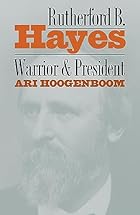
Rutherford B Hayes: Warrior and President by Ari Hoogenboom

★★★½
Genre: Biography
Subject: Rutherford B. Hayes
Setting: USA
Main Characters: RB Hayes,Lucy Hayes
Series: no
Dates Read: July 3 - July 11
Number of pages: 535
Off the Shelf (pre-2012)? Source?: no , Interlibrary Loan
Category for 12 in 12 challenge: History Class

Rutherford B. Hayes, for me, was just the name of the President who followed Grant. I really knew nothing about him. I read another biography which told me about his early life and military adventures during the Civil War but absolutely nothing about his Presidency so I ordered this book from another library and set to work to find out about his Presidency. I will admit to skimming through to his Presidency since I'd already been there and done that.

The Hayes Administration did not start out well. Because of the disputed election results from South Carolina, Louisiana and FLORIDA, the victor was not declared until March 2nd - two days before he was to take office. A special act of Congress and commission were needed to determine which election returns from these three states would be counted. There were questions of fraud, ballot box stuffing, and intimidation of voters - not the cheering that is expected at the end of an election.

Hayes had at the beginning stated that he would only serve one term. During that term he was confronted with numerous diplomatic issues - Chinese immigration and the beginning talks and negotiations regarding the Panama Canal. Domestic problems that he faced centered on the final reconciliation of the South by the removal of federal forces and reinstatement of local government control, redemption of greenbacks and return to specie payments, and his prime goal of civil service reform.

Hayes battled continually with the Democratic Congress because of his desire to reform the civil service and frequently had to veto appropriation bills because of riders that they inserted that would have weakened election laws in the South. Other items he should be remembered for are his stressing of education for all (which he worked on after he left office) and the final funding for the completion of the Washington Monument.

Rutherford B Hayes stated at his inauguration " he serves his party best who serves his country best." It was words he lived by, always believing that if he did what was best for the country, he would never hurt the Republican Party.

Benjamin Harrison said of Hayes on his death "His public service extended over many years and over a wide range of official duty. He was a patriotic citizen, a lover of the flag and of our free institutions, an industrious and conscientious civil officer, a soldier of dauntless courage, a loyal comrade and friend, a sympathetic and helpful neighbor, and the honored head of a happy Christian home. He has steadily grown in the public esteem, and the impartial historian will not fail to recognize the conscientiousness, the manliness, and the courage that so strongly characterized his whole public career."

The book is well-written, easy to read and follow, and apparently well-researched.

"Rutherford Hayes will forever be linked with the Disputed Election of 1876, an unfortunate legacy since he should be counted among the most honest presidents."

If only half of what is told in this biography is true, this man has earned my respect. This is a president I am glad that I found out about. Too bad not more people know of his life.

10/20/10

The Civil War at Sea by Craig L. Symonds


Read: October 12 - October 19
Format: Hardback 170 pages
Source: Public library ILL
Subject: Civil War, naval operations
Category: Civil War and its Leaders
Genre: History
Challenges: 101020, 75 Book, SYLL, TIOLI,
Stars: 3


When people think of the Civil War, rarely do naval campaigns come to mind, I know I never put the tow together until I began researching the books that dealt with this conflict and I was surprised to find that there were many from which to choose. This book details the contributions and shortcomings of both the Union and Confederate navies to the outcome of the War between the States.

Knowing that the Civil War was not exactly anticipated, one would think that the combatants would not have been prepared for naval operations at the beginning of the war, but the Union had actually been adding and improving its naval forces since the Mexican American War. With the advent of steam powered propulsion, Americans needed additional vessels for the protection of their coastline as well as the trade vessels that moved goods from port to port, so between 1854 and 1859, 24 new steam powered naval vessels were ordered built in three different classes with the latest armaments including larger guns, explosive shells, and ironclading. Even with these improvements, they were still more maneuverable than the old sailing vessels.

The South however, had difficulties with their naval forces because of lack of materials to produce new vessels or convert older vessels with ironclading and more accurate and powerful guns. The Confederacy did manage to commission several vessels to built in England, however, because of the neutrality, delivery was not possible in several instances. Many members of the US Navy from Southern states at the start of war resigned their commissions and headed home to enlist in the Confederate navy only to find the shortage of ships on which to serve.

Lincoln's first policy change in 1861 concerning the navy was to order a blockade of all the major harbors of the South to prevent the Confederacy from receiving goods needed to build and enhance their naval vessels. The blockades were not totally successful in prevent the blockade runners from reaching the Southern ports but the blockades were effective enough to demoralize the citizens of the Confederacy as the war progressed.

The Union Navy also combined with the army on several occasions to assist in major victories - Fort Donelson, Vicksburg, Charleston - though normally there was a rivalry between the two factions. While the Union Navy did not end the war and the Southern navy didn't win the war, each managed to triumph in battle against the other during the 4 years of conflict. Eventually, however, it was the ability of the Union navy to prevent delivery of goods and additional vessels as well as aiding with troop movements and supply lines, which shortened the war.
This was a very well written book detailing the naval vessels that were developed for both the North and South and how they were used in different battle situations. The drawings and paintings there were included were extremely helpful in allowing the reader to see how the old fortifications and forts were no longer able to stop the newer and better equipped vessels. Not a large book by size but large on detail.

10/7/10

The South vs. the South: How Southern Anti-Confederates Shaped the Course of the Civil War by William W. Freehling


Read: September 28 - October 7
Format: Hardback 206 pages
Source: Public library ILL
Subject: Civil War, Confederate preparedness
Category: Civil War and its Leaders
Genre: History
Challenges: 101020, 75 Book, SYLL, TIOLI,
Stars: 2½


In the various discussions/writings about the Civil War, several reasons have been presented as to why the South lost, but in this book, noted historian William Freehling offers readers an additional cause for the defeat of the Confederacy. Usually historians cite the overwhelming forces and industrial development of the North as the major contributing factors, but in this book, we are shown that the framework of the Confederacy itself, may have been to blame.

The Confederacy was composed of three different sections - the Cotton states of the deep south, the middle South, and the Border States. The most vital section was the border states (Missouri, Kentucky, Maryland) and due to their failure to secede and join the struggle, the Confederacy was hampered by a lack of manpower and transportation ports (St. Louis, Louisville, Baltimore). Divided loyalties had far more white soldiers from these states joining the Union Army as well as the industrial contributions made.

The Black population of the South also was a major factor- not simply because of the issue of slavery - but because of the volume of manpower that the North was able to utilize after Emancipation. The South lost its forced labor for creating fortifications while at the same time the North gained valuable manpower to supplement the troops.

Victory, however, was secured by the 13th Amendment. The Blacks (who had wisely assisted their struggle by doing anything to help the Union as well as fighting against their former masters) had proven themselves not to be insurrectionists, barbarians, but patriots for the Union cause. By supporting the Union in all its endeavors, the Blacks gained the white support in the vote for the 13th Amendment which finally broke the South.

In the end, it was the South's lack of recruiting the support of the black population which finally ended the South's hope of defeating the vast numbers of the North.

This book was informative, but a bit academic and very dry reading. While it gave the reader new insight into the actual reasonings for the South's defeat, it's not a book I would recommend unless someone was looking for very detailed information concerning the Civil War.

10/1/10

The Confederate ordeal:The Southern Homefront by Steven A. Channing


Read: September 23 - September 30
Format: 168 pages
Source: Public library ILL
Subject: Civil War, Southern reactions
Category: Civil War and its Leaders
Genre: History
Challenges: 101020, 75 Book, SYLL, TIOLI,
Stars: 3


Confederate Ordeal: The Southern Homefront is one of several books that addresses the Southern issues and citizen's viewpoint of the Civil War. The issues created when the general male population goes off to war leaving a female population that normally handles the "delicate" side of life to continue to produce the requirements for an army are well-documented as well as the shortsightedness of the Confederate government and politicians who push their populace into a war that they were ill-prepared for with only 1 factory able to produce cannon and firearms and none to create ammunition.

Entire areas are impacted when doctors are "drafted" leaving no medical care for the ordinary citizens. State Schools closed because there were no students and Ladies schools had no teachers. Stores closed because no one was there to stock the shelves.

Other issues that bother the citizens were related to their rights - the Confederate Government, in its rush to be setup, had not documented the individual rights of the citizens as had been specified in the USA Bill of Rights and Constitution. The Conscription Law, in essence drafting all men between the ages of 18 and 35 for 3 years, angered the majority of the population who saw it as favoring the rich and influential since they were able to avoid service if they could hire someone to take their place. Having a necessary job could also earn a man exemption from serving - some jobs that qualified were munitions worker, postal worker, preacher, blacksmith, telegraph operator. Because of this, the conflict became known as " a rich man's war and a poor man's fight."

The southerners saw, with the advance of the Union Army into the secessionist states, the confiscation of their property (food, livestock, and wagons), homes burned, and what couldn't be taken, destroyed. With all the young men in the army, those left behind were unable to restore what had been lost.

As the Union Army closed in, the Southerners in the battle states lost their last sense of dignity with the loss of their homes and their need to flee to other areas which could feed and shelter them. As the realization of their impending defeat hit home, many former anti-secessionists gave up the battle and supported the invading army both verbally and materially. President Jefferson Davis was ridiculed and on numerous occasions asked to end the war so that the surviving members of their families could come home and start again.

This wasn't a very large book but the impact with the numerous pictures of the suffering and destruction got the message across quite well.

9/9/10

Clash of cavalry; the Battle of Brandy Station, June 9, 1863 by Fairfax Downey


Read: September 4 - September 9
Format: 153 pages
Source: Public library, ILL
Subject: Cavalry during the US Civil War, Battle of Brandy Station
Category: Full Course Meal
Genre: History
Challenges: 101020, 75 Book, SYLL, TIOLI
Stars: 2½


During the American Civil War, numerous improvements were made to the "art of war" for the time but the most surprising may have been the improvement of the Calvary for the Northern/Union forces. This may have been best seen at the battle of Brandy Station (a small railroad post near Culpepper VA less than 40 miles from Washington, D.C. so named because "they had Brandy") which was fought on June 9, 1863 and by some historians was the opening of the Gettysburg campaign.

The main focus for the Confederate Army was to take the war to the North while for the Union forces, their goal was reconnaissance of the Rebel army. During this battle with JEB Stuart in charge of the Southern units and Pleasanton commanding the Union troops, the northern Calvary made tremendous gains in confidence while the battle was a considered a draw. Many historians apparently argue over the importance of this battle citing the start of the supremacy of Northern Calvary troops and at the same time, the deterioration of Stuart's Confederate dominion.

This was an unusual book and I don't necessarily mean that in a good way. It was filled with information - maps that were too small to read, lists of military officers and units from numerous states and areas of the nation, commanders of both sides, descriptions of horses and what color horse went with what unit (did I really need to read that?), sheet music which told the troops to charge, retreat, etc., pictures of armaments and their use and descriptions, troop movements, it went on and on. I did manage to gather in the midst of all this miscellaneous information the value of the Calvary officers and their role in the battles - not clearly but to a certain extent. This book was poorly written, very disjointed and jumpy and, I fear, that this little known battle does not receive it's proper significance because of such coverage. But I am glad I read it.