Showing posts with label Non-Fiction. Show all posts

3/24/16

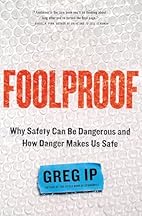
Foolproof: Why Safety Can Be Dangerous and How Danger Makes Us Safe ★★★ by Greg Ip


This isn't the type of book that I would normally read however, it was selected for my Book Club and the title did catch my interest.  That said, the first few chapters made me feel that I was back in Economics class in college and that wasn't pretty. However, as I got into the book I found that the areas that were discussed were extremely  thought-provoking.

The first several chapters dealt with risk involved with money - stocks, bonds, Federal Reserve and how it tries to control inflation and making our assets safer.

Quoting the book I found this part about political interference regarding the changes in bank loan requirements which eventually caused some of the sub-prime mortgage fiasco very enlightening and expect that many Democrats will disagree with what was said.
"Brad DeLong, an economist at the Univ of Calif at Berkeley, who had served in Clinton's Treasury from 1993 to 1995, described many years later why he and his fellow Democrats pushed deregulation (for home loans): "It had been more than 60 years since financial disruption had had more than a minor impact on overall levels of production and employment....The poorer 2/3 of America's population appeared to be shut out of the opportunities to borrow at reasonable interest rates... Depression-era restrictions on risk seemed less urgent, given the US Federal Reserve's proven ability to build firewalls between financial distress and aggregate demand. New ways to borrow and to spread risk seemed to have little downside....it seemed worth trying.  It wasn't."
Financial issues were also low-balled concerning the threat of baby boomers approaching retirement without sufficient savings.

Other areas of interest that were highlighted included:
1.  Football and hockey helmets and how they have changed the amount of risk that players accept
2. anti-lock brakes and seat belts and how they should have made driving safer but may have only increased the risk level that a driver will take   (I found it amusing that New Hampshire is the only state that does not require seat belt usage - their Motto -Live Free or Die.)
3. FDA new drug approval - is faster with higher risk from possibly dangerous drugs better than slower and  less risk that bad drugs will reach the market?
4. Natural disasters and their increasing costs - Hurricane Katrina and Superstorm Sandy impacted millions of people and climate change was touted as partially to blame but what about the decision of a growing population to settle and build in areas that are not really conducive to settlement?  If an area is repeatedly wiped out by hurricanes and other powerful natural occurring events, should the government continue to provide subsidies to rebuild?

I kept reading wondering if I had a choice how much of a risk was I willing to take? Would I build my home in a floodplain or near a forest subject to wildfires or on a cliff with regular mudslides?  If my home had been destroyed, would I rebuild in the same place?

It appears that as we increase the safety in our society we are counterbalancing by increasing the risk as well.  Is this a good thing?

I won't say this was a great book, at times it was hard to keep going, but it did give me lots to think about.

DATE READ: March 10 - March 19
NO. OF PAGES: 277
Type of Book e-book
SOURCE: Barnes and Noble

8/17/15

Million Death Quake by Roger Musson


This book wasn't what I expected from the title.  I expected to read about where the great quake was expected to occur and possibly what we could do to prevent catastrophic death count, however, what I got was a book about the causes of earthquakes, identification of areas that are prone to large magnitude earthquakes, and the explanation of the measurements and what they mean.  Disappointing.

★★½"

GENRE: NON-FICTION
DATE READ: August 8 - August 16
NO. OF PAGES: 244
Challenges: 75, Category, TIOLI , AlphaKit
SOURCE: Public library

4/26/15

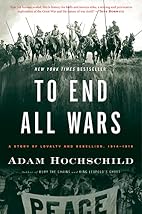
To End All Wars: A Story of Loyalty and Rebellion, 1914-1918 by Adam Hochschild


I thought that as an avid reader and a lover of history that I knew the basics about World War I.  I'd heard about trench warfare, chlorine gas, mustard gas, and shell shock but I didn't really understand them and I wasn't prepared for what I learned while reading this book.

They called it the Great War.  However, this war was apparently completely unnecessary.  That's right - 8.5 million casualties, 12-13 million civilian deaths  totally unnecessary brought on by a war-hungry monarch and military men who wouldn't accept the changes that the 20th century had brought to the battlefield.

Kaiser Wilhelm wanted to play at war, he always wore a uniform and he wanted to prove his country's superiority.  The excuse used to start the war was the assassination of Archduke Franz Joseph and his wife (he abhorred war - how ironic).  The Austro-Hungary empire would have probably controlled the effects with a small military action in Serbia where the assassination had taken place, but as an ally of Austro-Hungary, Kaiser Wilhelm and Germany took it upon themselves to stress escalation.

So we have a war and the British, who had end the Boer wars several years before thought that they were ready to take on the Germans with the same tactics as used then.  However, since the Boer wars the 20th century saw motor vehicles, machine guns, and airplanes come into existence. Gen. Douglas Haig would not accept that cavalry was no longer useful with the new methods available.  Time and time again he would send men to certain death by commanding offensives directly into the German machine gun nests.  Hundreds of thousands of men were killed in weeks and Haig just kept sending them.

On the home front, massive labor strikes and Conscientious Objectors filled the headlines.   The Conscientious Objectors were sent to prison with sentence ordering hard labor (16 hours a day) half rations and no heat.  Women were imprisoned if they argued against the war.

But really bothered me the most about what I learned was the actual cause of shell shock.  Imagine sitting in a deep ditch for weeks on end and then suddenly being bombarded by artillery NON-STOP for days at a time so loud that you couldn't hear the person next to you talking.  I personally can't handle a loud thunderstorm that's off again on again for 20 minutes - how can you handle this acoustic attack?

The Allied Forces were actually losing the battle until the Americans joined the fight.  The Treaty that ended the war was so vindictive that many historians see it as a contributor to World War II.

The book was slow to start, had some areas where it was extremely repetitive concerning the women that were against the war, but highly informative.

★★★½

GENRE: History
CHARACTERS: John French, Charlotte Despard, Douglas Haig, Alfred Milner 
DATE READ: April 10 - April 26
NO. OF PAGES: 511
Challenges: 75, Category, TIOLI, AlphaKit
SOURCE: Library, Nook Stockpile

8/29/13

The Immortal Life of Henrietta Lacks by Rebecca Skloot


★★★½
GENRE: Non Fiction
SUBJECT: tissue samples, question of consent, HELA cells
Setting: Baltimore, MD
CHARACTERS: Henrietta Lacks, George Gey, Deborah Lacks, Rebecca Skloot
DATE READ: August 23 - August 27
NO. OF PAGES: 619
Off the Shelf (pre-2013)? Source?:   no, public library

PLOT:....................................................................3.00
CHARACTERIZATION:.......................................3.00
TOPICS: ...............................................................3.50
STYLE:..................................................................3.50
ORIGINALITY:.......................................................4.50
ADDICTIVENESS:..............................................3.00
OWNERSHIP:......................................................3.00
Threshold Quality.................................................3.00
Average..............................................................................................3.31

This book is a combination of the details of medical research using HELA cells and the life of the woman whose cells they were.  Her family was never aware that her cells had been taken and were being used for massive research areas - polio, TB, etc.  Her cancer cells which were taken from her in 1951 are still being used in research today. When the cells are placed in the proper medium they continue to grow.

One of the major points of interest in this book is the discussion of the question of consent.  The author analyzes the ethical issues of using tissues without consent forms signed vs. the need of medical researchers needs to tissues for experimentation. 

Recommended to those interested in the processes of medical research.

5/24/13

Manifest Injustice by Barry Siegel


 ★★★¾

GENRE: Non-Fiction
SUBJECT: miscarriage of justice, USA legal system errors
Setting: Arizona
CHARACTERS: Bill Macomber, Larry Hammond, Bob Bartels, Jackie Kelley
DATE READ: May 13 - May 22
NO. OF PAGES: 260
Off the Shelf (pre-2013)? Source?:   Yes, LT ER for review

PLOT:................................................4.50
CHARACTERIZATION:...................4.00
TOPICS:............................................4.00
STYLE:..............................................4.00
ORIGINALITY:...................................3.00
ADDICTIVENESS:...........................4.00
OWNERSHIP:...................................3.50
THRESHOLD QUALITY:..................3.25
Average...................................................................3.78

How would you react if you had spent 38 years of your life in prison for a crime you hadn't committed losing contact with your growing children as a result?

In 1974 Bill Macomber was convicted of the murders of two teenagers in 1962 on evidence that apparently was planted by his estranged wife who worked in the Sheriff's office at the time of his conviction. 
This book tells the story of the efforts of Project Justice to free Mr. Macomber who throughout his incarceration, was a model inmate inspiring others by his spirit and appreciation of those who fought for him.

I'm so glad that I got to read this book, but wonder how our system could continue to lock up this man when so many believed him innocent and the suspect evidence had "disappeared".  Many questions arose from this book as to whether justice can truly be found.

I believe that Mr. Macomber's story should be mandatory reading for all law students so that they will understand that there are innocent people that do get convicted and that all efforts should be made to prevent this from happening in the future.  

The politics involved in his release truly astounded me.

1/29/13

Chester Alan Arthur by Zachary Karabell


 ★★¾

GENRE: History
SUBJECT: Chester Arthur
Setting: Washington DC  USA
CHARACTERS: Chester A Arthur
DATE READ: January 26 - January 28
NO. OF PAGES: 154
Off the Shelf (pre-2013)? Source?:   No, public library

PLOT: 2.5
CHARACTERIZATION: 2.5
TOPICS: 3
STYLE: 3
ORIGINALITY: 2.5
ADDICTIVENESS: 2.5
OWNERSHIP: 2.5
THRESHOLD QUALITY: 2.5
Average 2.63

There are few books which tell of the life of the 21st President of the United States - possibly because he was controversial at the time, possibly because he wasn't elected but was thrust into the office by an assassin's bullet, possibly because he never wanted to be President.

There are few details other than the historical records because Arthur had his papers destroyed upon his death.  But his short administration did have its accomplishments.  Civil Service reform was the major achievement.

11/21/11

The Necklace by Cheryl Jarvis

Read: November 17 - November 19
Format: Paperback 210 pages
Source: my shelves
Subject: friendship, sharing, materialism
Challenges: 11 in 11, 75 Book, TIOLI, BOYS
Category: Something Old - read those TBRs
Genre: Non-Fiction
Stars: ★★★★½

Jonell McLain was walking past a jewelry store and saw a beautiful diamond necklace and immediately wondered what it would be like to wear. She went inside, tried it on, and then found out that the price was $37,000. It was great fun for a lark but she knew she would never be able to buy it. Frequently, when she was walking by she'd still see the Necklace in the window, and even noticed it had been reduced to $24,000. Still too rich for her blood. Still thinking about, she wondered how many other women would like to wear something like it on a special occasion and so she came up with the idea of sharing. When she read an ad that the jewelry store was having an auction, Jonell knew it was time to put her plan into action. With 12 other women, including the jewelry store owner's wife, Jonell bought the NECKLACE and started a special group that touched many lives in Ventura CA.

First, they gave it a name - Jewelia. Then they decided how it would be shared - each women would have Jewelia for 4 weeks including their birthday. Then the women would meet and pass Jewelia on. Soon they were sharing not just among themselves but with others for charity - an evening with Jewelia could raise thousands of dollars as women came and got a chance to wear the necklace for an hour, or 5 minutes but they got the chance. The story of this Necklace and the amazing 13 women who were its guardian was awe-inspiring as we see how an "exclusive" piece of jewelry got to be "inclusive" at the initiative of its owners.

What startles me about this book, is that first, it's not the type of book that I normally would read but I was at the bookstore and they had a Buy 3 get 1 Free table - of course I could find 3 books I wanted but when it got to the 4th book nothing grabbed me. Then I saw this book and being a Jewelry fiend I picked it up and headed to checkout knowing nothing about it. The book fairy was on my shoulder that afternoon - it's one of my favorite reads of the year!

8/25/11

The Last Boy: Mickey Mantle and the End of America's Childhood by Jean Leavy

Read: August 23 - August 25
Format: Overdrive equivalent of 553 pages
Source: Public Library
Subject: Mickey Mantle Bio
Category: Something Borrowed from the library
Challenges: 11 in 11, 75 Book, TIOLI, SYLL
Stars: ★★

This is a biography of New York Yankee Mickey Mantle. I'm not exactly sure how to review it so I will just tell you my feelings. I am an avid baseball fan - mostly the Baltimore Orioles therefore, you do hear about the dreaded Yankees. So I really expected to hear more about baseball, but what I read was basically about injures and inappropriate behavior by Mantle and his teammates. He couldn't seem gather his excellence from the field and continue it in his private life.

The first few chapters were interesting, but then it just seemed to be the same over and over - play great, injury, bad behavior, repeat. I guess hearing the life of another pro player who just died there was a great contrast - maybe Mantle was a great player who was denied his full potential by an early injury, but the injury wasn't what stopped him from being a great man.

11/13/10

Over the edge of the world:Magellan's terrifying circumnavigation of the globe by Laurence Bergreen


Read: November 1 - November 13
Format: Audio 14 CDs - equivalent 480 pages
Source: Public library
Subject: exploration and discovery
Category: Overflow
Genre: History
Challenges: 101020, 75 Book, SYLL, TIOLI, RTT,Endless Europe
Stars: 3


It's hard to believe that Magellan who was as important as he was to history, doesn't even get a first page hit in Google - if it's not a GPS, Magellan is nothing. Magellan was the first person who set out and proved that by sailing west you can get to the east.

At the time of Magellan's expedition that was a great rivalry between Spain and Portugal. When Magellan was denied support from his own country (Portugal) he turned to King Charles of Spain. With Spanish backing, Magellan's expedition was the best-equipped during the age of Discovery. Even with this only one ship of the 5 that set out returned filled with the spices for which they had searched. The captain was dead, more than 200 of the men had died either from scurvy, drowning, torture, or execution.

the story was filled with tales of mutiny, cannibalism, disease, orgies, superstitions, and religious zeal. I found it fascinating.

10/1/10

The Confederate ordeal:The Southern Homefront by Steven A. Channing


Read: September 23 - September 30
Format: 168 pages
Source: Public library ILL
Subject: Civil War, Southern reactions
Category: Civil War and its Leaders
Genre: History
Challenges: 101020, 75 Book, SYLL, TIOLI,
Stars: 3


Confederate Ordeal: The Southern Homefront is one of several books that addresses the Southern issues and citizen's viewpoint of the Civil War. The issues created when the general male population goes off to war leaving a female population that normally handles the "delicate" side of life to continue to produce the requirements for an army are well-documented as well as the shortsightedness of the Confederate government and politicians who push their populace into a war that they were ill-prepared for with only 1 factory able to produce cannon and firearms and none to create ammunition.

Entire areas are impacted when doctors are "drafted" leaving no medical care for the ordinary citizens. State Schools closed because there were no students and Ladies schools had no teachers. Stores closed because no one was there to stock the shelves.

Other issues that bother the citizens were related to their rights - the Confederate Government, in its rush to be setup, had not documented the individual rights of the citizens as had been specified in the USA Bill of Rights and Constitution. The Conscription Law, in essence drafting all men between the ages of 18 and 35 for 3 years, angered the majority of the population who saw it as favoring the rich and influential since they were able to avoid service if they could hire someone to take their place. Having a necessary job could also earn a man exemption from serving - some jobs that qualified were munitions worker, postal worker, preacher, blacksmith, telegraph operator. Because of this, the conflict became known as " a rich man's war and a poor man's fight."

The southerners saw, with the advance of the Union Army into the secessionist states, the confiscation of their property (food, livestock, and wagons), homes burned, and what couldn't be taken, destroyed. With all the young men in the army, those left behind were unable to restore what had been lost.

As the Union Army closed in, the Southerners in the battle states lost their last sense of dignity with the loss of their homes and their need to flee to other areas which could feed and shelter them. As the realization of their impending defeat hit home, many former anti-secessionists gave up the battle and supported the invading army both verbally and materially. President Jefferson Davis was ridiculed and on numerous occasions asked to end the war so that the surviving members of their families could come home and start again.

This wasn't a very large book but the impact with the numerous pictures of the suffering and destruction got the message across quite well.

9/14/10

Desperate engagement : how a little-known Civil War battle saved Washington, D.C., and changed American history by Marc Leepson


Read: September 9 - September 14
Format: 236 pages
Source: Public library
Subject: Civil War, Battle of Monocacy, Capital defenses
Category: Civil War and its Leaders
Genre: History
Challenges: 101020, 75 Book, SYLL, TIOLI
Stars: 4


How amazing is it to live within a 50 mile radius of an area and never know the historical impact that it holds? We've all heard of Bull Run, Gettysburg, Appomattox but how many of you have ever heard of the Battle of Monocacy? I hadn't and I've lived in the area for nearly 40 years. How many of you knew that the Confederate Army ever threatened to invade Washington D.C.? Did you know that Abraham Lincoln was actually fired upon by a hostile army?

This book told the tale of the Confederate invasion of the state of Maryland in 1864 by Jubal Early and his regiments. They marched through most of the far northern suburbs of Washington D.C. - Frederick, Hagerstown, Urbana and were confronted by a small contingency of union soldiers led by Lewis Wallace (author of Ben-Hur) who knew that Washington was undermanned and also realized that for there to be enough time for reinforcements to arrive to man the fortifications of the capital, his men would have to engage and prevent Early's army from progressing beyond the Monocacy River for at least a day - 5,800 men against 16,000 - not promising but somehow the union soldiers held their ground for the necessary time before their retreat. Early moved on to Rockville, Silver Spring, Tenleytown - and were "knocking at the door of a nation's capital when the reinforcements from General Grant arrived in the night.

I found this book to be terribly engrossing probably because it told me facts about the Civil War that I never knew as well as about an area that I have lived in and never fully realized its impact in history. Definitely a book that should receive more exposure.

6/26/10

Tariffs, Blockades, and Inflation: The Economics of the Civil War by Robert B. Ekelund Jr.


Read: June 23 - June 26
Format: Trade paperback 132 pages
Source: Barnes & Noble
Setting: USA
Category: Who/What/When/Where/How/Why? - Bios/history
Challenges: 101020, 75 Book, RTT, TIOLI, BOSC
Stars: 2½


The Civil war was a highly complex event in history and observing how economics impacted the nation should enlighten the reader. For 136 pages this was pretty heavy reading. I'm not expecting other casual readers to pick up this book so therefore this review will be somewhat detailed.

Tariffs had been a major issue prior the war. The South wanted low tariffs while the North wanted high because of the difference between the agrarian society in the South and the industrial in the North. Throughout the early 1800's the tariffs fluctuated to keep the sections happy. Toward the end of the 1850's the tariffs were running high.

When the book moved on to the discussion of Blockades, it became a bit more interesting (flashes of Rhett Butler). The Majority of the discussion was about the different commodities and how the blockade runners chose to bring over luxuries rather than necessities because of higher profits.

The south injured themselves by not controlling prices of goods brought through the blockades. If they had had more necessities they may have been in better position to withstand the Union forces.

Inflation was the main issue for the downfall of the Confederacy. Financing a war can be done in several ways or a mixture of ways - taxation, borrowing, confiscation, conscripting, and inflation.
Borrowing from foreigners to buy foreign goods, protects the economy and spreads the costs of the war over more years. However, getting loans can be difficult if the lenders doubt the ability of the borrower to repay the loan. The Confederacy borrowed very little.

Conscription/Confiscation was also used little by the Confederate government because of the political dissatisfaction of those affected - compelling labor and capital out of its citizens with reduced compensation for such, didn't bode well in the South.

During the war, labor and capital were redirected from normal processes to military purposes. Labor forces went to fight the war and death and injuries reduced current and future production. Production went from civilian goods to military requirements - i.e. plows to cannons - and capital goods were switched to military use - railroads.

The government of the Confederacy issued new money which distorted prices and wages while hiding the cost of the war and giving an appearance of prosperity. Studies have shown that the Union also used inflation but not as much and that printing "greenbacks" increased the cost of the war by $528M. The South's rate of inflation in the 4 war years was 100%.

In the North, Abraham Lincoln attempted to moderate the impact of inflation and created his own "New Deal" during his administration. Some of the legislation he enacted was related to the first Income Tax, Homestead Act, land grants for Yosemite as well as the railroad, National banking Acts, and regulation of mail delivery both Urban and by Railroad, while modifying the central government to include the Department of Agriculture, Comptroller of the Currency, National Academy of Science, and the Office of Immigration.

There were many effects of the war - emancipation was primary but there was also the establishment of the US as a global power, 3 amendments to the Constitution(slavery, citizenship, suffrage), intercontinental Railroad, industrial revolution. While these were improvements there were also detrimental effects such as decreased workforce, financial and commercial ties severed, fallow farmland, reduction of assets for the Railroad and shipping industries.

My editorial would read that the Introduction is filled with so many 5+ syllable words that it would turn off the general reader. The main work was way too stuffy and high-handed and reads more like a thesis than a book for the general public. I think that it should be noted that scholars or economists may find it fascinating, the general reader would most probably not even get to Chapter One. That said, I'm still glad that I read it so that as I get farther into my Civil War reading I will understand the background of this impact.

6/6/10

THE IMPENDING CRISIS by David M. Potter

Read: May 12 - June 6
Format: Hardback 583 pages
Source: Public Library
Subject: Political issues leading to Civil War
Challenges: 101020, 75 Book, Chunkster, SYLL , RTT
Category: Who/What/When/Where/How/Why? - Bios/history
Genre: History
Stars: 3½

Americans have heard much about the Civil War and how it started over slavery and the attack at Fort Sumter but after finishing this book, the reader realizes that the Civil War was about so much more.

In this book, which spans the era of time from 1848 when Zachary Taylor was elected President after the Mexican American War to the first shots at Fort Sumter in 1861, the deluge of information concerning the issues of the time can often be overwhelming. The Southerners were concerned about the apparent efforts of the Northerners to prevent them from continuing their society in the manner of the day and the Northerners were trying to prevent the spread of slavery into the territories.

The reason that the book starts with the time period after the Mexican American war is blatantly obvious because of the additional territories acquired in the settlement from Mexico. The political arenas of this era were filled with Northern Abolitionists, Southern Secessionists, and all manner in-between. As the political battles raged, "the South became increasingly a closed society, distrustful of isms from outside and unsympathetic toward dissenters".
Yet the decisions made by the states to attempt secession were not simply n the spur of the moment as sometimes implied by historians, but was discussed and threatened on numerous occasions for several decades. After Lincoln's election 120 days elapsed before his inauguration ad during that time, the southern states held numerous conventions to determine their "plan of attack" to the situation. In the time that it took Lincoln to get from Illinois to Washington, the Southerners had held their conventions and created a provisional government and elected Jefferson Davis as their President.

What was the Union doing you ask? President Buchanan was trying to be peacemaker (unsuccessfully) and Lincoln was waiting for his "power". As President-Elect he had none. After taking office, Lincoln had to deal with the various factions and determine his stance and political reactions to the Southern states that had "seceded".

The crisis had arrived and had to be dealt with and Lincoln set about to do just that. His policy was that the Union needed to be preserved at any cost and thus civil war was thrust upon a nation.

So much information to absorb but I'm hoping that this background will help when I move forward from this time period to the actual war itself.

I knew that there were alot issues related to the Civil War and so I asked someone who I thought was very knowledgeable about the era what book to read. JOYCEPA of the ClubRead group told me that this was one of the best and I want to thank her for the recommendation.

5/1/10

The Power of Half by Kevin Salwen


Read: Apr 29 - May 1
Format: Hardback 244 pages
Source: FSB Media for review
Subject: Charity, Ghana, donations
Setting: Atlanta, GA USA
Category: Books found - Internet/thru LT/library/bookstore
Genre: Non-Fiction
Challenges: 101020, 75 Book,
Stars: 3½


I used to think that I was a generous person until I read this book. I mean, after all, I gave to different charities, helped those in need, volunteered a little, and I even gave a home to a homeless person we knew. But when I read this book, I felt that I was falling short and wasn't sure that I had it in me to be as generous as this family.

This is the true life story of the Salwen family from Atlanta GA who sold their $2Million house so that they could take the proceeds and donate half to a charity which helped fight hunger in Africa. They donated $800,000 to this effort because their 14 year old daughter felt that they weren't doing enough to assist those that were less fortunate. I truly admire this family because I don't think that I or my husband would be willing to make this kind of sacrifice.

This book raised a lot of questions throughout especially from the journal of the young daughter, but the one that I don't know how to answer is…. How many lives would you be willing to save in exchange for the person that you love the most? I can't answer that, can you?

3/25/10

Perfection Salad: Women and Cooking at the Turn of the Century

[]
#28Author: Laura Shapiro
Read: Mar 20 - Mar 23
Format: paperback, 227 pages
Source: Public Library
Subject: Cooking, nutrition, economy
Category: A Full Course meal
Genre: History
Challenges: 101020, 75 Book, SYLL, TIOLI
Stars: 2½


This book is basically the history of Home Economics that were taught to the poor in the late 19th and early 20th century. Women in Boston in the late 19th century started a group called the Women's Education Association and later another was the Boston Kitchen. Women's Education Association of Boston "believed that educated women were the natural leaders of a domestic revolution that was only waiting to be ignited."Women of these organizations worked to improve the appearance, nutritional value and cost efficiency of the food that was being prepared by the lower classes. Notice that taste did not enter into their equation. If it was nutritious and could be made for pennies a day/person, they didn't care what it taste like. However, back in that time, recipes didn't have any consistency until Fannie Farmer came along and standardized measurements. Yes, there really was a Fannie Farmer and when she published recipes they became standards for the new housewives and cooks in the nation. Her books showed basic procedures of how to boil, bake, stew, fry, and debone so that new cooks would be proficient and if when times were tough, domestic help was unattainable.

One of the interesting items was a suggestion that menus be developed according to the workload of the day. Monday - the normal laundry day of the time - was strenuous so potato salad was recommended so that leftovers could then produce mashed potatoes. Tuesday - ironing day - nothing that would give off a scent should be cooked so that the smell of the cooking food wouldn't cling the freshly pressed clothes.

Anything that was served with lettuce was considered a salad - Perfection Salad itself was a mixture of cabbage, celery, and red peppers, chopped finely and bound together by a plain gelatin. Gelatin (KNOX in particular) became very popular at this time. This salad did not last the test of time unlike the Waldorf salad that was developed at the same period. Salads were reserved for the upper class because it was believed that it was Brain food because it required less digestion.

Some fun facts that were noted in the book
1) daily guidelines were for men 90 gr of protein and 4500 calories per day (reduced slightly if not working at physically demanding labor) where women were 1200 calories (obviously they didn't think that housework in those days was physically demanding). 2) Food at the hospitals, almshouses, and prisons was not supposed to be palatable to prevent the people desiring to return for the food. 3) Ladies Home Journal and Good Housekeeping were part of the Home Economics movement of the time. (I didn't know that.)
It was an interesting book, not sure whether I would recommend it or not because the writing style was a bit dry.

2/2/10

The California Gold Rush and the Coming of the Civil War by Leonard L. Richards


Read: Jan 28- Feb 1
Format: paperback, 277 page
Source: Barnes & Noble
Setting: United States - California, Washington, DC, Panama
Subject: California, Statehood, Compromise of 1850, Gold Rush
Category: Who/What/When/Where/How/Why? - Bios/history
Genre: History
Challenges: 101020, 75 Book
Stars: 4½


Have you ever wondered what was involved in bringing a new state into the union? This book details the history of the statehood of California as well as the politics that surrounded the procedure following the discovery of gold in 1847.

Just as the Mexican-American War is ending, gold is discovered at Sutter's Mill in the Sacramento Valley. Now the word Gold Rush is not exactly accurate. Word was sent to Washington of the discovery, but they didn't believe it at first. By the time the gold hunters were "rushing" off to California, months had passed. The new miners came from parts of California, the eastern United States, Mexico, Australia, China and South America. Some travelled around the Cape Horn, others crossed the isthmus and then back north up the Pacific coasts. Either way it took months to get to the gold fields.

With the influx of all the gold hunters, California, part of the land settlement with Mexico, had sufficient population to apply for statehood immediately. Californians wanted to be admitted to the Union as a free state and drafted a constitution stating that "Neither slavery nor involuntary servitude, unless for the punishment of crimes, shall ever be tolerated in the State." However, the Southern Slave states were adamant that they needed room to expand and that due to Missouri Compromise the southern portion of California, at least, should be slavery friendly.
California's statehood became a major bone of contention between the abolitionists and the pro-slavery lobbies of the day. Unionists fought secessionists, fistfights turned into duels. Henry Clay proposed a Compromise which would aid the South in retrieving runaway slaves while California was admitted as a free state. Just as a deadlock seemed imminent, President Taylor, strongly in favor of California statehood without compromise, dies leaving Millard Fillmore (who was in favor of the legislation) to support and sign the documents. Would matters and history have been different if Taylor had lived? We will never know.

The men that were elected to represent California in the Senate were actually Southern slaveholders and voted in numerous instances in the South's favor prior to the war. To reach California without going by sea, a need for a transcontinental railroad was debated. Southerners wanted a route through Texas, while Northerners wanted the route to go through the Nebraska territory. The need for land required the organization of the Kansas and Nebraska territories.
In the decade before the election of Lincoln, the California Senators, Gwin and Broderick were major players in the controversies between the North and South. Broderick who was violently opposed to Buchanan due to a Buchanan's handling of the patronage positions in California, fought with Stephen Douglas against the statehood submission from Kansas. Gwin, on the other hand, was close to Buchanan and when the issues came to a head, knocked out not only his fellow Californian but Stephen Douglas from their positions of influence in the Senate.

Due to the loss of his influence, Broderick encountered difficulties when he returned to the west for elections, and was killed in a duel the day after elections were held. Gwin and his followers were blamed for the "assassination" of Broderick. Later, Gwin's return to Washington went unnoticed due to the recent activities of John Brown in Harper's Ferry. The nation, due to the politics of North vs. South, was being torn apart. How appropriate that, at the same time that North and South were ripping each other apart, the politicians of California sent a bill to Congress to separate California into two states?

When the war finally began, California remained on the side of the Union and its yearly gold shipment supported the war effort throughout.

Did the discovery of Gold in California, hasten the call to war while assisting the Union during its trial? How interesting it might be if we could re-write history?

This was a well-crafted book telling the tale of California's statehood using the people that created it. The prologue starts with the duel in which Senator Broderick is killed and then the story weaves its way through the state history bringing the reader full circle to that point in time showing all the while the importance of the men and the events involved.

8/6/09

JOHN QUINCY ADAMS; A PUBLIC LIFE, A PRIVATE LIFE by Paul Nagel


Read : June 28 - Aug 6
Category : US Presidents, Histories, Biographies
Pages : 420

I have to admit that I knew hardly anything about John Quincy Adams (JQA) before I read this book. All I knew was that he was the 6th President of the United States and the son of John Adams, the 2nd President. I can no longer say that. This book was absolutely tremendous in telling the reader about the man, statesman, politician, son, husband, father, grandfather.

I won't try to convey all the information that Paul Nagel, the author, tries to give the reader. It would be impossible. What I will tell you is that this book tells you the history of man, who was brilliant, strove for perfection in himself, was ambitious yet scholarly and poetic, who wanted only the best for the nation that his father helped to birth.What I will you is that there were so many moments in history that he touched and was part of and never received the credit that I think he deserved if what is in this book is true. I say that because most of the book is based on JQA's papers, journals, etc. and could be biased.

Did you know that he was part of the commission that handled the negotiations for the Louisiana Purchase, or that he headed the diplomatic corps that negotiated the treaty that ended the War of 1812? Did you know that he was Secretary of State at the time that Monroe Doctrine was issued (I believe he was the one that put the bug in Monroe's ear)?

All this said, I don't believe that he was meant to be President. Not that he wasn't qualified, he didn't have the temperament for the political side of the job and the manner of his election (through the House of Representatives) didn't make it easier. After he was defeated for reelection by Andrew Jackson, he went on to a brilliant career in the House and was responsible for the protection of the Smithson bequest to the United States which we now have as the Smithsonian Institute.

As for the book, it was tremendously informative but it got weighed down by too many excerpts from his journal and sometimes there was too much detail. All in all, I'd read it again if I knew nothing about the man, but now I think, I may know too much.

6/27/09

THE GEOGRAPHY OF BLISS by Eric Weiner


Read : June 21 - 27
Category : New Writers
Pages : 328

Have you ever heard of the study of happiness? I know that I hadn't until I read this book, I understand now, how addictive it could be to try and find a happy place, if, of course, I wasn't already happy and had an expense account to fund it.
This book gives statistics of happiness arrived at through vast research, for example:
Extroverts are happier than introverts;
optimists are happier than pessimists(who would have thunk?);
married people are happier than singles, though people with children are no happier than childless couples;
Republicans are happier than Democrats;
wealthy people are happier than poor ones; (do the last two go together?)
people with an active sex life are happier than those without; (Does that one go with the last two, too?
busy people are happier than those with little to do;
it just goes on and on.

So the author sets out to explore the possibility that some places are happier than others. He starts out in Holland and after determining that part of the "happiness" allure to the Dutch nation is the legality of pot and prostitution, and their fondness for cycling, he moves on to Switzerland.

After all, Switzerland makes great Chocolate, what would make you happier? The insights presented for Swiss happiness appear normal in some instances (nature, mountains) and bizarre in other ( strict laws - no toilet flushing after 10PM but euthanasia is legal). Philosopher Bertrand Russell wrote "A certain amount of boredom is essential to a happy life" and the author concludes the Swiss reason for happiness is that they are boring. He moves on.

Next is Bhutan and Asian country in the Himalayas which actually has a national Happiness Policy and it is part of the national anthem. What would you expect being so close to the mythical Shangri-La.

The author visits Qatar where Happiness is a winning lottery ticket, Iceland where happiness is failure (a unique concept), Moldova which is at the bottom of the happiness scale (possibly because of the economic and cultural conditions since the Soviet breakup), and Thailand where the people are too busy being happy to think about happiness because they take life as it comes.
Starting his trip heading home, the author stops in India receiving the definition of Indian happiness being unpredictability, and Great Britain is happy with change. Finally arriving home the author determines that paradise is fleeting. If you find it, everyone else will too and then, it might not be paradise anymore. But, for most, Happiness is home.